Get expert tax and accounting help!Call(212) 641-0673

Author

George Dimov — Page 56

Expert tax tips, accounting insights, and financial guidance from George Dimov, CPA — serving clients across all 50 states for over a decade.

Page 56 of 57

Browsing all posts: Page 56 of 57

I live in Kansas but work in Missouri
October 20, 2016Taxes5 min read

I live in Kansas but work in Missouri

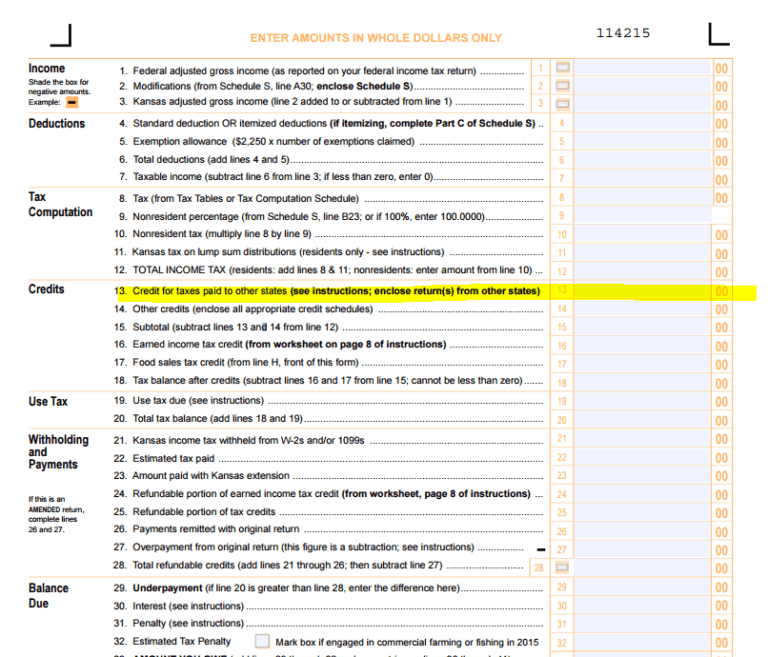
Filing in multiple states is common and doesn't necessarily mean double taxation. If you live in one state (like Kansas) but work in another (like Missouri), you generally receive a **credit for taxes paid to other states**. To avoid double taxation, first complete your federal and nonresident state returns. Then, take the tax liability from the nonresident return and apply it as a credit on your home state return. This mechanism ensures you only pay the higher of the two rates.
Tax return to bring to court case
October 20, 2016Taxes5 min read

Tax return to bring to court case

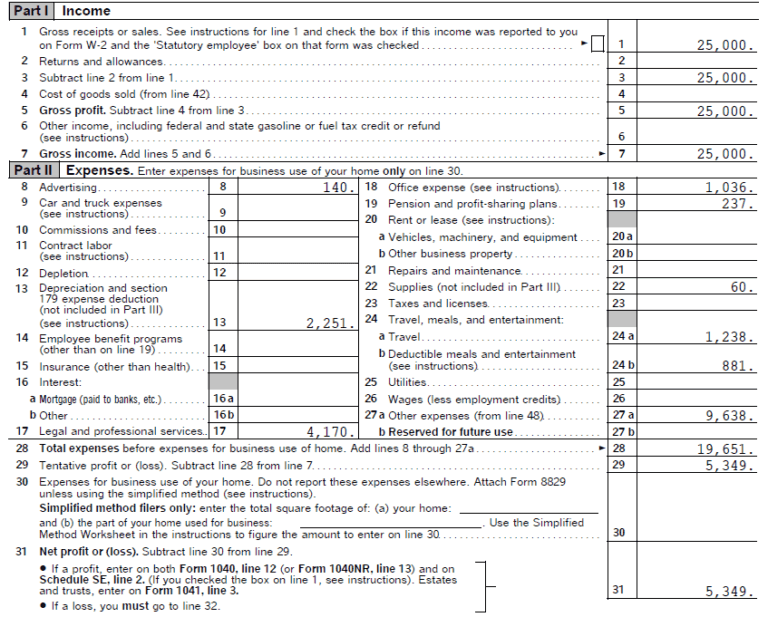
In civil court, clients often need to prove their income level, especially when facing lawsuits. For self-employed individuals, Schedule C is essential to show net income after expenses and depreciation. To corroborate these figures, I use bank statements to build accurate financial reports. My role involves preparing these tax returns and providing explanatory letters on CPA letterhead to detail the methodology used, ensuring the documentation is court-ready and credible.

October 20, 2016Taxes5 min read

Tax returns to get a mortgage

Buying a home often motivates taxpayers to catch up on years of unfiled returns, as lenders require proof of income. To reconcile, start with the oldest return to ensure Net Operating Losses (NOLs) and carryover credits flow correctly into subsequent years. A CPA-signed return strengthens mortgage applications, and attaching a statement can help secure IRS late-filing waivers. This process provides the financial clarity needed to secure a loan and move forward.

October 20, 2016Taxes5 min read

Need letter from CPA for a Bank Loan or Mortgage

Lenders and landlords often ask self-employed applicants—such as freelancers, contractors, and LLC owners—for a CPA letter to verify income and business stability. These requests, sometimes called "comfort letters," help bridge the gap for those without traditional W2s.

October 20, 2016Taxes5 min read

Tax Returns for USCIS

USCIS applications, such as Form I-751 or N-400, often require proof of tax compliance. If you have unfiled returns, submit them immediately via certified mail before your interview. Bring a copy of the returns, USPS delivery confirmation, and a CPA letter confirming their preparation.

October 19, 2016Taxes5 min read

I have a New York State LLC. How do I file my taxes?

LLC status primarily offers liability protection, but for tax purposes, an LLC can be a **single-member LLC (default)**, S Corp, C Corp, or Partnership. Filing as a single-member LLC via **Schedule C** is often the most cost-effective for small businesses, allowing losses to flow through to your personal return with lower accounting fees. While S Corps can reduce self-employment taxes, the added payroll costs often outweigh the savings. Schedule C feeds directly into your **NY IT-201**.

October 19, 2016Taxes5 min read

Using freshbooks to file your taxes

**FreshBooks** is a user-friendly accounting tool ideal for freelancers and small businesses. To streamline tax filing, you can invite your accountant to the platform and generate a **Profit and Loss report** for the taxable year. The figures from this report are then transferred directly into your **Schedule C, 1120, or 1065 return**. This process ensures your tax filings accurately reflect your financial performance while saving time on manual data entry.

October 19, 2016Taxes5 min read

Cost of Co-Op Audited Financial Statements in New York City

In NYC, audited financial statements for luxury co-ops and condos typically cost between **$8,000 and $14,000**. Fees depend on building size, transaction volume, and record accuracy. The audit includes detailed footnotes on maintenance increases, labor costs, cash reserves, and capital expenditures. Usually, the same firm handles the **Form 1120 tax return**. These statements are vital for transparency, shareholder trust, and informed decision-making regarding building management.

October 19, 2016Taxes5 min read

Using Mint.com to file your taxes

**Mint.com** is a quick, user-friendly tool for managing business expenses. To prepare a **Schedule C or 1120S return**, export your transactions to a **CSV file** and use an Excel **pivot table** to summarize totals. If the data isn't categorized, use filters to reconcile items based on bank memos. It is less clunky than other apps and highly recommended for non-finance savvy owners. Simply export the data, categorize it, and input the totals directly into your tax software.

October 7, 2016Taxes5 min read

Income Statements for Breaking Ground

To qualify for middle-class NYC affordable housing, applicants—especially sole proprietors—must provide detailed income statements. Agencies often require a **notarized estimate or CPA-signed projection of net income** to verify eligibility within specific brackets (e.g., $28k–$38k).

October 2, 2016Taxes5 min read

Applying tax refunds to subsequent years will be beneficial if there was a revision to a prior tax return resulting in a finding of deficiency

Applying a tax refund to a future year can reduce interest owed on a deficiency from a prior year. For example, a 2010 overpayment applied to 2011 may reduce the interest on a 2010 deficiency. However, interest relief is limited to one year, even if the credit carries forward for multiple years. The IRS does not automatically compute interest under Rev. Rul. 99-40; you must request it (informally or using Form 843).

September 29, 2016Taxes5 min read

Can a long term capital loss carry forward offset the recapture of accumulated depreciation and capital gains on a property sale?

You can use a **capital loss carryover** to **offset a capital gain** from the sale of a building, potentially eliminating tax owed. Capital gain is calculated from the sales price minus the adjusted cost basis (original cost less depreciation). If the gain is fully offset by losses, there is no **depreciation recapture**. Long-term stock losses can offset depreciation recapture gains (unrecaptured Section 1250 gain), which is taxed at a maximum of 25%.

Contact us anytime

Ready to get started?

Please fill out this form and someone will get back with you shortly. We are available in the evenings and on the weekends for your convenience.