Get expert tax and accounting help!Call(212) 641-0673

Blog

Expert Tax & Accounting Insights — Page 54

Stay informed with the latest tax strategies, accounting best practices, and financial insights from our team of experienced CPAs.

Page 54 of 57

Browsing all posts: Page 54 of 57

March 12, 2018Taxes5 min read

Credit for Taxes for Repaid Bonus

If you repay a bonus in a later year, you can recover the taxes already paid using the Section 1341 Claim of Right Credit. This allows you to claim a refund for the "lost" tax without amending prior returns.
March 12, 2018Taxes5 min read

Taxation of ESPPs explained

To avoid double taxation on ESPP stock options, you must adjust the cost basis on Form 1099-B. Brokerages often report a "zero" or low basis, but the discount you received is usually already taxed as ordinary income in Box 14 of your W-2. Use Form 3922 to calculate the correct basis: multiply shares by the fair market value on the exercise date. Adding this taxed "spread" to your purchase price prevents overpaying capital gains tax.

January 28, 2018Taxes5 min read

Taxation of RSUs explained

To avoid double taxation on Restricted Stock Units (RSUs), you must report the correct cost basis on your tax return. While the value at vesting is taxed as compensation in your W-2 (Box 14 or 12, Code V), brokers often report a "zero" basis on Form 1099-B. You must manually adjust the basis to the Fair Market Value (FMV) at the time of vesting. Failure to do so leads to the IRS taxing the full sale price, often resulting in a CP2000 notice or a large tax bill.

January 6, 2018Taxes5 min read

Claiming expenses against K-1

To deduct expenses against Partnership K-1 income, you should ideally claim them at the entity level. If you use personal funds, the best practice is to seek reimbursement from the business. However, you can deduct Unreimbursed Partnership Expenses (UPE) directly on Schedule E, Line 28, provided your partnership agreement specifically requires you to pay them personally. This is vital because, since 2018, these costs can no longer be claimed as itemized deductions on Schedule A.

October 4, 2017Taxes5 min read

Tax Treatment of Cryptocurrency Trading

Assets held over one year qualify for long-term capital gains (up to 20%), while short-term gains are taxed as ordinary income (up to 37%). If you have losses, you can offset gains plus up to $3,000 of ordinary income, carrying the rest forward indefinitely. Accurate record-keeping and FIFO or specific identification methods are essential for calculating your cost basis.

August 22, 2017Taxes5 min read

Past-Due Tax Returns

Missing W2s or 1099s shouldn't stop you from filing past-due tax returns. We can retrieve your financial history directly from the IRS, including account transcripts and employer-submitted records. Addressing overdue returns promptly is vital to minimize failure-to-file and failure-to-pay penalties, which compound over time. Our team helps estimate these costs and ensures every detail is captured to reduce your overall tax liability and restore your financial standing.

August 21, 2017Taxes5 min read

Income Projection Letter for Rental Apartment

Self-employed individuals often need a CPA Income Projection Letter for rental applications to verify unpredictable 1099 or LLC income. Landlords use these letters to assess long-term financial stability. A CPA does more than sign a form; they cross-reference bank statements and tax returns to validate your earnings. For complex cases, the letter itemizes multiple streams like rental income or pensions, providing landlords with a credible, professional view of your cash flow.

July 23, 2017Taxes5 min read

LLC vs. S-Corp

An LLC provides liability protection with simple reporting; by default, a single-member LLC is a "disregarded entity" filed on Schedule C. However, electing S-Corp status (Form 2553) can significantly reduce self-employment taxes. The trade-off is increased complexity: S-Corps require formal payroll, "reasonable" owner salaries, and separate federal filings (Form 1120-S). Choosing between them depends on whether tax savings outweigh the added bookkeeping and payroll costs.

July 22, 2017Taxes5 min read

Certified Statement of Assets & Liabilities

Lenders and landlords often require a Certified Statement of Assets & Liabilities (or Statement of Net Worth) to verify your financial standing. This CPA-certified document itemizes your assets—such as cash, real estate, and business interests—and subtracts liabilities like loans and credit card debt to determine your total net worth.

March 17, 2017Taxes5 min read

Things to Consider When Purchasing a NYC Luxury Condominium or Co-Op

When purchasing a luxury NYC condo or co-op, you must evaluate both physical and financial health. Physically, prioritize the age and maintenance history of high-cost systems like the façade, boiler, HVAC, and plumbing.

January 15, 2017Taxes5 min read

12-Month Income Projection for Affordable Housing

When applying for NYC affordable housing through Housing Connect (HPD/HDC), self-employed applicants face unique documentation hurdles. Beyond standard bank statements, W2s, and 1099s, you often need a notarized 12-month net income projection signed by a CPA.

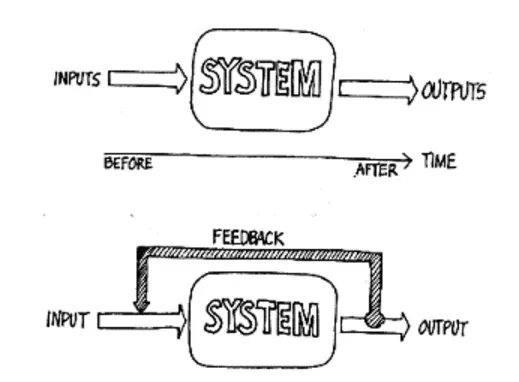
Information System Feedback Loops
November 27, 2016Taxes5 min read

Information System Feedback Loops

An Accounting Information System (AIS) operates like a manufacturing line: Input (raw data) is transformed via Process (analysis/matching) into Output (financial statements). To ensure quality, repetitive systems use a Feedback Loop: Output is measured by a Sensor, evaluated by a Comparator against an ideal model, and adjusted by an Activator. This cycle—common in both quality control and budget variance analysis—allows businesses to refine strategies and improve data utility continuously.

Contact us anytime

Ready to get started?

Please fill out this form and someone will get back with you shortly. We are available in the evenings and on the weekends for your convenience.